

:max_bytes(150000):strip_icc()/Kouign-Amann-FT-RECIPE1223-4de20eacf78848eaa947a68a402de25b.jpg?w=1068&resize=1068,0&ssl=1 "kouign amann")
Introduction
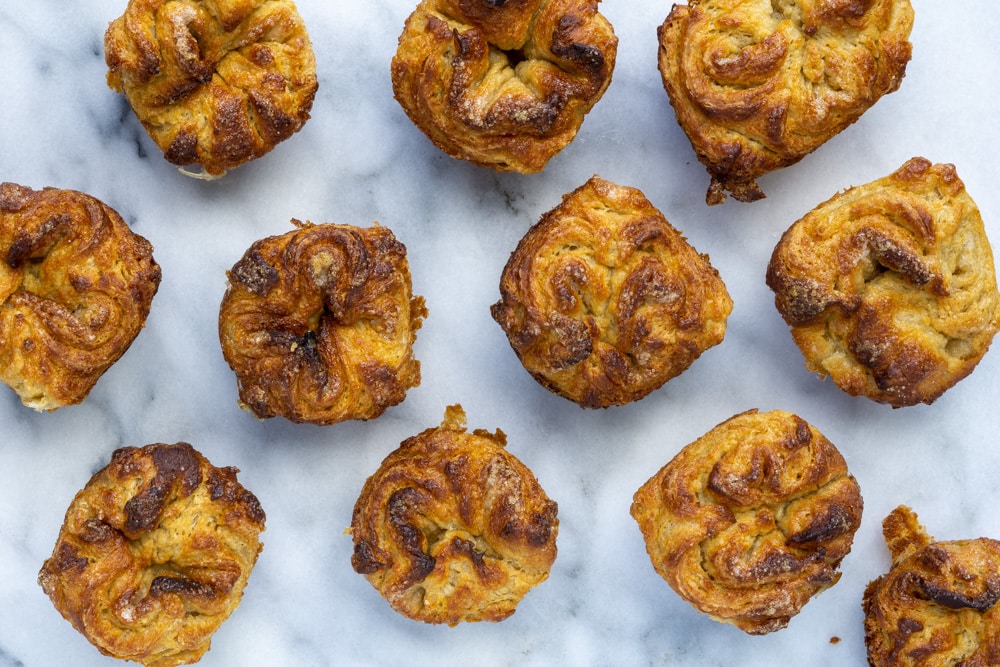
With its creamy, buttery layers and caramelized sugar exterior, the traditional French pastry known as kouign amann has enthralled pastry enthusiasts worldwide. This pastry, which comes from the Brittany area of France, blends the delicate laminated dough methods with an appealing sweetness. The word “kouign amann” literally means “butter cake” in Breton, emphasizing butter as the main component of the pastry. Kouign amann is substantial but flaky, with a caramelized crunch that characterizes its distinct texture, in contrast to croissants, which are light and airy.
The intriguing history of kouign amann reflects the French love of fine pastry workmanship as well as local culinary customs. It has evolved from a local specialty to a globally renowned dish throughout the ages, showing up in bakeries from Paris to New York. It takes time and talent to make, but the end result is a pastry that strikes the ideal mix of crisp, buttery, and sweet flavors.
How Kouign Amann Got Started

The 19th century saw the invention of Kouign amann in the tiny town of Douarnenez, which is located in Brittany, a seaside region in northwest France. This region was ideal for the creation of a butter-focused pastry because it has long been recognized for its rich dairy products and premium butter. A local baker created the original recipe in an effort to produce a pastry that was both aesthetically pleasing and delicious.
The agricultural goods of Brittany, especially salted butter, are integral to its culinary identity. The distinctive flavor of kouign amann is derived from the use of this butter, which contrasts exquisitely with the caramelized sugar. The ingredients for kouign amann were straightforward, but making the laminated dough correctly needed a great deal of skill, therefore historically, it was seen as a working-class delicacy. The pastry, praised for its opulent flavor and texture, gradually became well-known throughout France and eventually the world.
Components of Kouign Amann
The simplicity of kouign amann is what makes it so magical. It simply needs a few simple ingredients, but it’s rich and decadent. The secret to creating the pastry’s distinctive layers is mastering the lamination technique, which involves folding dough with butter. The main components are water, yeast, sugar, wheat, butter, and salt.
Table 1: Kouign Amann’s Basic Ingredients
| Ingredient | Quantity | Notes |
|---|---|---|
| All-purpose flour | 250g | Provides structure for the pastry |
| Unsalted butter | 200g | High-quality, preferably European butter |
| Granulated sugar | 200g | For layering and caramelization |
| Active dry yeast | 5g | For dough rising |
| Salt | 5g | Enhances flavor |
| Water | 120ml | Lukewarm for yeast activation |
When laminating, the sugar and butter must be balanced for kouign amann to work. While too little sugar can produce a buttery pastry without the caramelized crisp that characterizes the real thing, too much sugar might burn while baking. The distinctive puffed, multi-layered structure is produced by the folding technique, which guarantees that the layers of butter and sugar are evenly distributed.
Getting the Dough Ready
Making the yeast dough is the first stage in creating kouign amann. The base of the pastry is made by combining the flour, yeast, water, and salt. The dough should stretch without tearing since it should be soft but elastic. Depending on ambient temperature, it typically takes one to two hours for it to double in size after kneading.
The dough is rolled out and ready for lamination once it has risen. To produce alternate layers of dough and butter, add the butter in the center and fold the dough over several times. This method is comparable to creating croissant dough, but it also involves adding sugar in between folds, which caramelizes when baked.
Kouign Amann Lamination
The hallmark of kouign amann is lamination, which calls for accuracy and patience. After rolling the dough into a rectangle, sugar is added and butter is smeared evenly. Multiple layers are then created by folding the dough in a series of turns, usually three to four. To achieve neat, distinct layers and stop the butter from melting, chill the dough in between folds.
A pastry that is properly laminated will have a soft, flaky interior while puffing beautifully in the oven. The sugar caramelizes and melts, forming a golden, crispy crust. Kouign amann is particularly delicious because it strikes a balance between crispness and depth, unlike other pastries.
Kouign Amann Baking
High heat is necessary while baking kouign amann to guarantee that the layers of dough puff properly and that the sugar caramelizes without burning. It is necessary to preheat the oven to 200°C (392°F). Small circular molds are typically used to bake the pastry, allowing it to rise uniformly and take on its distinctive shape.
A glossy, caramelized exterior is created when the sugar melts and mixes with the butter during baking. The top of the completed pastry should be golden brown, and layers of flaky dough should be visible underneath. Before serving, kouign amann should be allowed to cool somewhat so that the caramelized sugar hardens and improves the texture and flavor.
Different Kouign Amann Varieties
Although only butter and sugar are used in classic kouign amann, contemporary pastry chefs have tried a variety of fillings and flavors. Adding chocolate, fruit preserves, or nuts in between the layers are some common variants. These versions offer distinct flavor characteristics while preserving the integrity of the layered dough.
For example, chocolate kouign amann has thin chocolate layers that melt in the oven and combine with the caramelized sugar to create a rich, delectable treat. A new take on the traditional pastry is offered by fruit varieties like apple or raspberry, which add a delicate tartness that balances the sweetness of the sugar and butter.
Table 2: Common Variations of Kouign Amann
| Variation | Description | Flavor Profile |
|---|---|---|
| Classic | Butter and sugar | Buttery, sweet, caramelized |
| Chocolate | Layers of chocolate added | Rich, sweet, indulgent |
| Fruit-filled | Raspberry or apple preserves | Sweet with a tart contrast |
| Nutty | Almond or hazelnut layers | Sweet, nutty, slightly crunchy |
These versions preserve the classic charm of kouign amann while enabling bakers to innovate. The method is the same, but to accommodate fillings, it could be required to make small changes to the ratios of butter to sugar.
Serving and Having Fun Amann Kouign
The ideal way to eat kouign amann is warm from the oven or slightly chilled. It’s difficult to resist the melt-in-your-mouth sensation created by the warm, caramelized sugar and buttery layers. It is typically served as a decadent afternoon snack, dessert, or morning pastry.
The tasting experience is improved when kouign amann is paired with tea or coffee. While the sweetness goes well with delicate teas, the richness of the pastry counterbalances the bitterness of the coffee. A glass of milk is also enjoyed by certain pastry aficionados, since it helps balance off the richness of the butter.
Advice for Perfect Amann Kouign

It takes careful attention to detail to create the ideal kouign amann. Using premium butter, keeping the dough cold, and properly timing the folds and baking are some crucial pointers. The layers will stay distinct and flaky if lamination is done with patience.
Another piece of advice is to keep a tight eye on the oven. A little overbaked kouign amann will taste harsh rather than sweet because the sugar might caramelize quickly. Using tiny molds helps preserve the pastry’s recognizable round shape and enables even baking.
In conclusion
French pastry craftsmanship is demonstrated by kouign amann, which combines intricate technique with basic ingredients. It has a devoted following among pastry lovers all around the world thanks to its rich flavor and buttery, caramelized layers. From its beginnings in Brittany to contemporary bakeries worldwide, kouign amann continues to be a representation of luxury and artistry.
A celebration of butter, sugar, and deft baking, kouign amann is more than just a pastry, whether it is consumed in its traditional form or in inventive versions. Mastering kouign amann is both a challenge and a delight for anyone who enjoys exquisite pastries.
Read More:- Overnight Oats Guide: Healthy Recipes and Tips for Busy Mornings
:max_bytes(150000):strip_icc()/Kouign-Amann-FT-RECIPE1223-4de20eacf78848eaa947a68a402de25b.jpg?w=1200&resize=1200,0&ssl=1&description=Discover the art of making kouign amann, the French pastry with layers of butter and sugar, its history, recipes, and tips for perfect results every time.)